
Expert endoscopy, close to home.
At Ormiston Endoscopy, we provide a comprehensive range of diagnostic and therapeutic endoscopic procedures to support your digestive health. Our experienced specialists use the latest technology in a modern, comfortable environment – ensuring safe, accurate results and personalised care every step of the way.

Full list of endoscopy procedures:
A colonoscopy is a medical procedure where a doctor uses a flexible tube with a camera (colonoscope) to examine the inside of the colon and rectum. It helps detect abnormalities like polyps, inflammation, or cancer. A bowel prep to clear the colon is required before admission and the procedure is done with sedation.
A gastroscopy is a medical procedure where a thin, flexible tube with a camera (gastroscope) is passed through the mouth to examine the oesophagus, stomach, and the first part of the small intestine. It helps diagnose issues like ulcers, inflammation, or tumours. Patients are usually sedated or given a throat spray to reduce discomfort.
A flexible sigmoidoscopy is a medical procedure where a doctor uses a thin flexible tube with a camera to examine the rectum and lower part of your large colon. This procedure often requires enemas to clear the last part of your colon to allow good views and often sedation is not required. This procedure helps detect polyps, bleeding or inflammation.
Banding of haemorrhoids is a medical procedure where small rubber bands are placed around the base of internal haemorrhoids to cut off their blood supply. This causes the haemorrhoids to shrink and fall off within a few days. The procedure is usually done in conjunction with a colonoscopy to ensure there are no other causes of bleeding coming from further up the colon. Sedation and local anaesthetic are generally required.
Anti Reflux Mucosal Ablation (ARMA) is an endoscopic procedure used to treat gastroesophageal reflux disease (GORD). It involves removing small areas of the mucosal lining near the lower oesophageal sphincter using Argon Plasma Coagulation to promote scarring and tighten the valve. This helps reduce acid reflux by improving the barrier between the stomach and oesophagus. This procedure is done via a gastroscopy where a small tube is inserted into the stomach while sedation is administered. A liquid diet is required for three days after the procedure.
Endoscopic Mucosal Resection (EMR) is an endoscopic procedure used to remove abnormal tissue, large polyps or early-stage cancerous lesions from the lining of the digestive tract. A special solution is injected under the lining to lift the area, making it easier to remove. It is minimally invasive and helps avoid the need for more extensive surgery. It is done in conjunction with a gastroscopy, colonoscopy or flexible sigmoidoscopy with sedation for comfort.
Argon Plasma Coagulation (APC) is an endoscopic procedure that uses ionized argon gas and electrical current to control bleeding or remove abnormal tissue. It is commonly used to treat lesions, angiodysplasia or bleeding in the gastrointestinal tract. The procedure is non-contact, precise and generally safe with minimal discomfort. It is done in conjunction with colonoscopy or gastroscopy procedures and with sedation.
HALO Radiofrequency Ablation (RFA) is an endoscopic procedure used to treat Barrett’s oesophagus by removing abnormal precancerous cells. It delivers controlled radiofrequency energy to the affected oesophageal lining, causing the tissue to be destroyed and replaced by healthy cells. The procedure is done via a gastroscopy under sedation.
Endoscopic Submucosal Dissection (ESD) is an advanced endoscopic procedure used to remove larger or deeper lesions from the gastrointestinal tract. It involves carefully dissecting beneath the lesion in the submucosal layer to remove it in one piece. ESD allows for precise, complete removal of early cancers or precancerous growths without the need for open surgery. It is done in conjunction with either a gastroscopy or colonoscopy with sedation or a general anaesthetic.
Endoscopic Intramuscular Dissection (EID), sometimes referred to as a full thickness resection, is an advanced endoscopic technique used to remove deep or complex gastrointestinal lesions involving the muscular layer. It involves carefully dissecting within or just above the muscle layer to achieve complete removal of the lesion. EID is minimally invasive and helps avoid more extensive surgical procedures. It is done in conjunction with gastroscopy or colonoscopy under general anaesthetic. Patients usually stay 1-2 nights in hospital.
Per Oral Endoscopic Myotomy (POEM) is a minimally invasive endoscopic procedure used to treat achalasia, a condition where the oesophagus has trouble moving food into the stomach. It involves creating a small incision in the oesophageal lining and cutting the tight muscle at the lower end to improve swallowing. The procedure is done through a gastroscopy under general anaesthetic followed by 1-2 night’s stay in hospital.
Zenker’s Per Oral Endoscopic Myotomy (Z-POEM) is a minimally invasive endoscopic procedure to treat Zenker’s diverticulum, a pouch that forms in the throat that effects swallowing and collects food. It uses a gastroscope to reach the pouch and cut the muscle separating the pouch from the oesophagus, improving swallowing and reducing symptoms. This is done with a general anaesthetic and 1-2 night’s stay in hospital.
Gastric Per Oral Myotomy (G-POEM) is a minimally invasive endoscopic procedure used to treat gastroparesis by cutting the muscles at the stomach outlet. This helps improve stomach emptying and reduce symptoms like nausea and bloating. The procedure is done using a gastroscope into the stomach under a general anaesthetic and requires 1-2 night’s stay in hospital.
Colonic and oesophageal stent insertion is a procedure where a flexible tube, endoscope is placed in a narrowed or blocked section of the colon or oesophagus to keep it open. The stent helps relieve symptoms like obstruction, difficulty swallowing or bowel blockage. It is usually done endoscopically under sedation and provides quick symptom relief without major surgery.
Submucosal Tunnelling Endoscopic Resection (STER) is a minimally invasive procedure to remove tumours located within the wall of the gastrointestinal tract. It involves creating a tunnel beneath the mucosa to access and safely remove the tumour. This technique preserves the outer layers of the digestive tract and promotes faster healing. This is done during a colonoscopy and required sedation or general anaesthetic and a 1-2 night hospital stay.
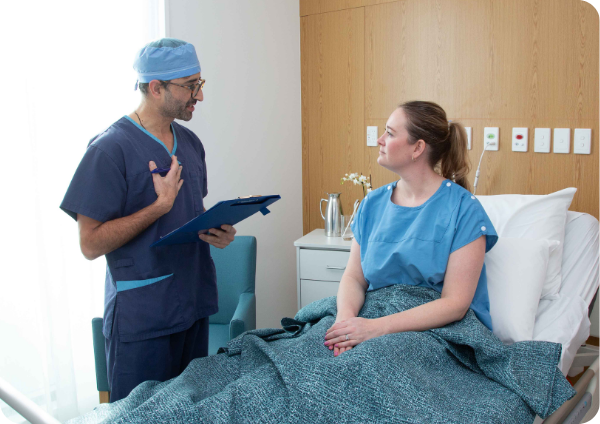
Our Specialists
We work with leading gastroenterologists and endoscopists dedicated to providing expert care. Learn more about the team based at Ormiston Hospital.